01 / The problem
Model choice starts before fitting.
A user may know their research question but not the statistical vocabulary needed to choose between regression, clustering, survival, mixed-effects, or machine-learning approaches.
The application asks about the analysis goal, outcome and predictor types, sample size, missingness, distribution, relationship shape, and correlated predictors. It uses those answers to narrow the model space and explain why a method fits the stated problem.
Offer a starting point for discussion and study planning—not an automatic substitute for statistical judgment.
02 / Recommendation logic
Compatibility rules produce a ranked shortlist.
Hard compatibility
Filter on analysis goal and dependent-variable type before scoring finer preferences.
Weighted evidence
Score relationship type, predictor types, sample size, missingness, distribution, and correlation structure.
Model-specific rules
Reward regularization for correlated predictors, clustering for unsupervised goals, and hierarchical models for nested data.
Diverse alternatives
Return strong candidates from different model families rather than four near-identical variations.
03 / Product
Guidance that can be saved and revisited.
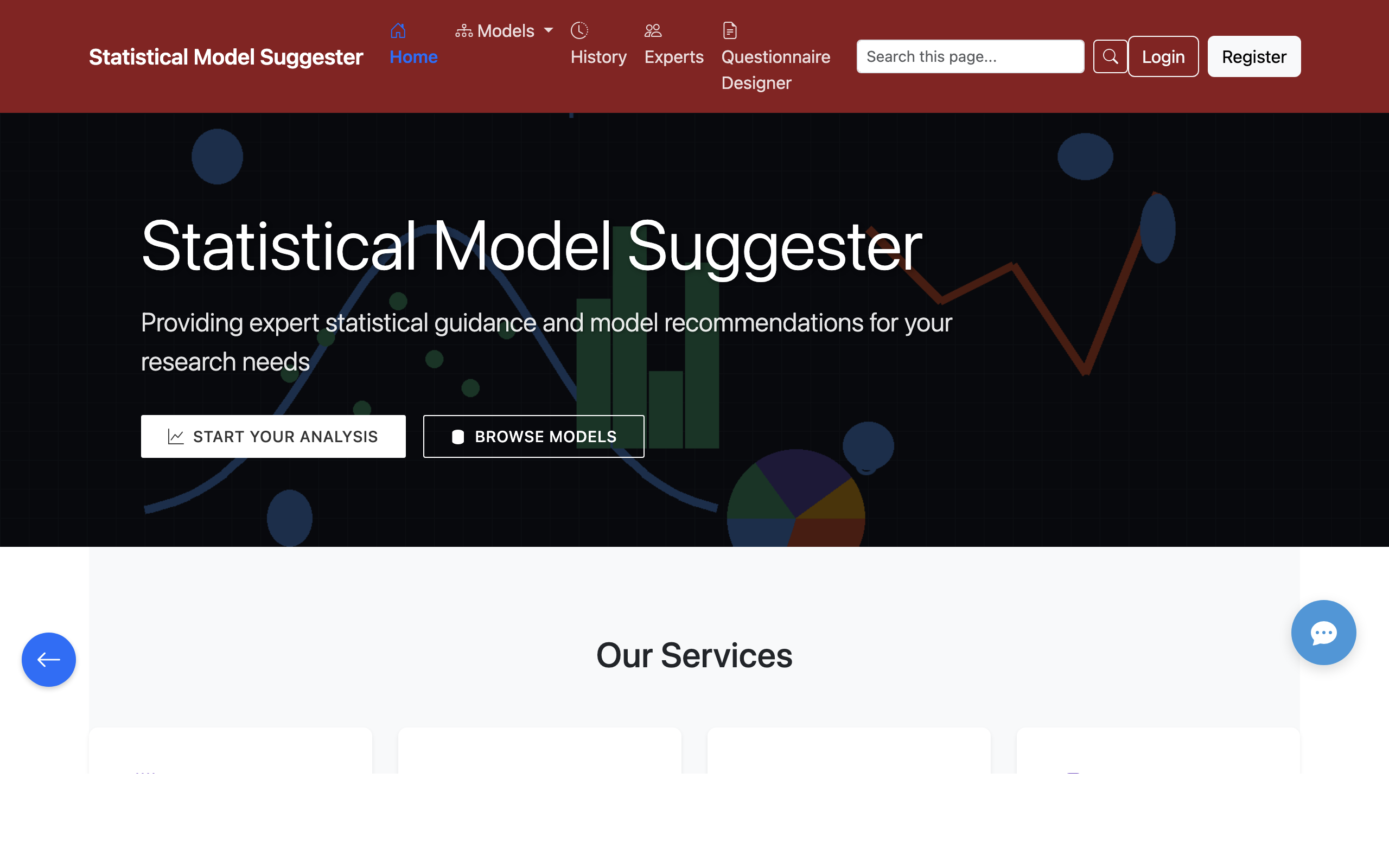
Primary and alternative models
Each result includes an explanation tied to the user’s answers.
Analysis history
Authenticated users can save and revisit prior questions and recommendations.
More control
Advanced routes expose additional model and diagnostic detail.
Portable results
Recommendations can be exported to PDF or Word when optional dependencies are installed.
04 / Diagnostics
A recommendation should come with checks.
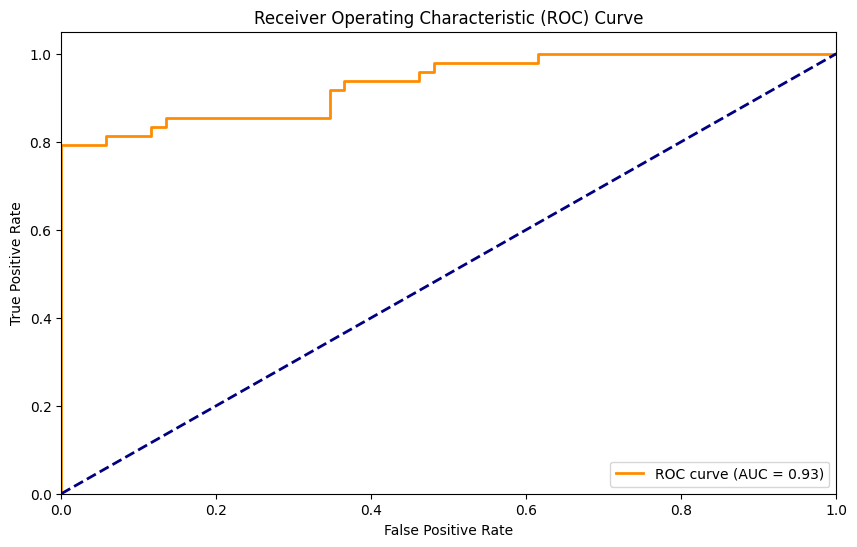
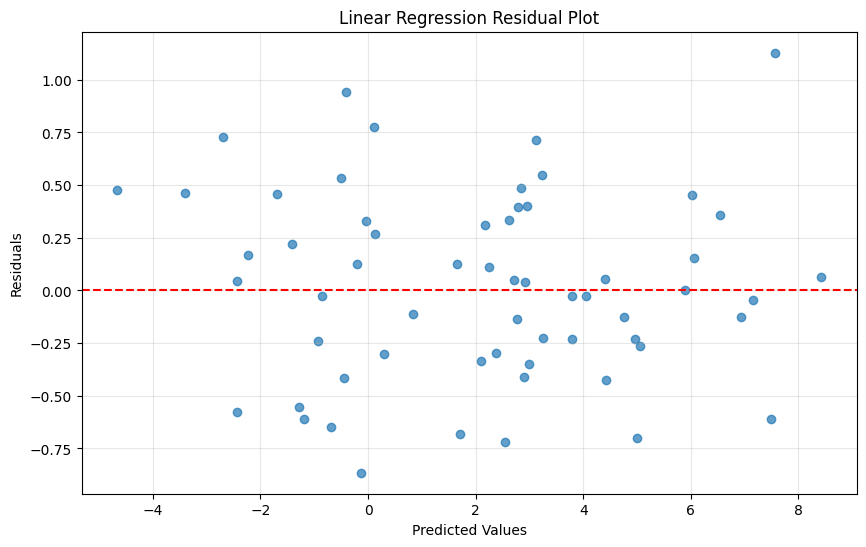
The repository includes diagnostic generators tailored to regression, classification, dimensionality reduction, time series, survival models, boosting methods, and more. These example plots illustrate the type of evaluation attached to a selected model; they are demonstration outputs, not results from a user study.
05 / Boundaries
Inputs cannot capture the whole study.
The recommendation is a prompt for deeper review.
A short questionnaire cannot fully represent sampling design, measurement error, causal assumptions, repeated measures, selection mechanisms, or domain constraints. The engine ranks models from encoded compatibility rules; it does not inspect the raw dataset or guarantee that assumptions hold.